Thursday, 26 March 2015

Fidget is a little star!


Fidget is doing really well at the moment (I hope I am not tempting fate).  This is the best time of year for him really as the Sweet Itch season hasn't started yet.  The grass also hasn't really started growing much yet so he is still out in the field with the others.  He mostly enjoys being out with them although they do sometimes chase him around!


Once the grass really starts growing he has to be on restricted grazing to keep his weight under control and ensure he doesn't get Laminitis.  He also has to wear his Sweet Itch rug to stop him rubbing his mane and tail raw!


He has been enjoying some time out without his rug on with the warmer, drier weather too.


He recovered well from his ROA episode in November which is great and he hasn't had a relapse which is even better news. He sometimes struggles at this time of year as by now he has been in at night for several months but so far so good.


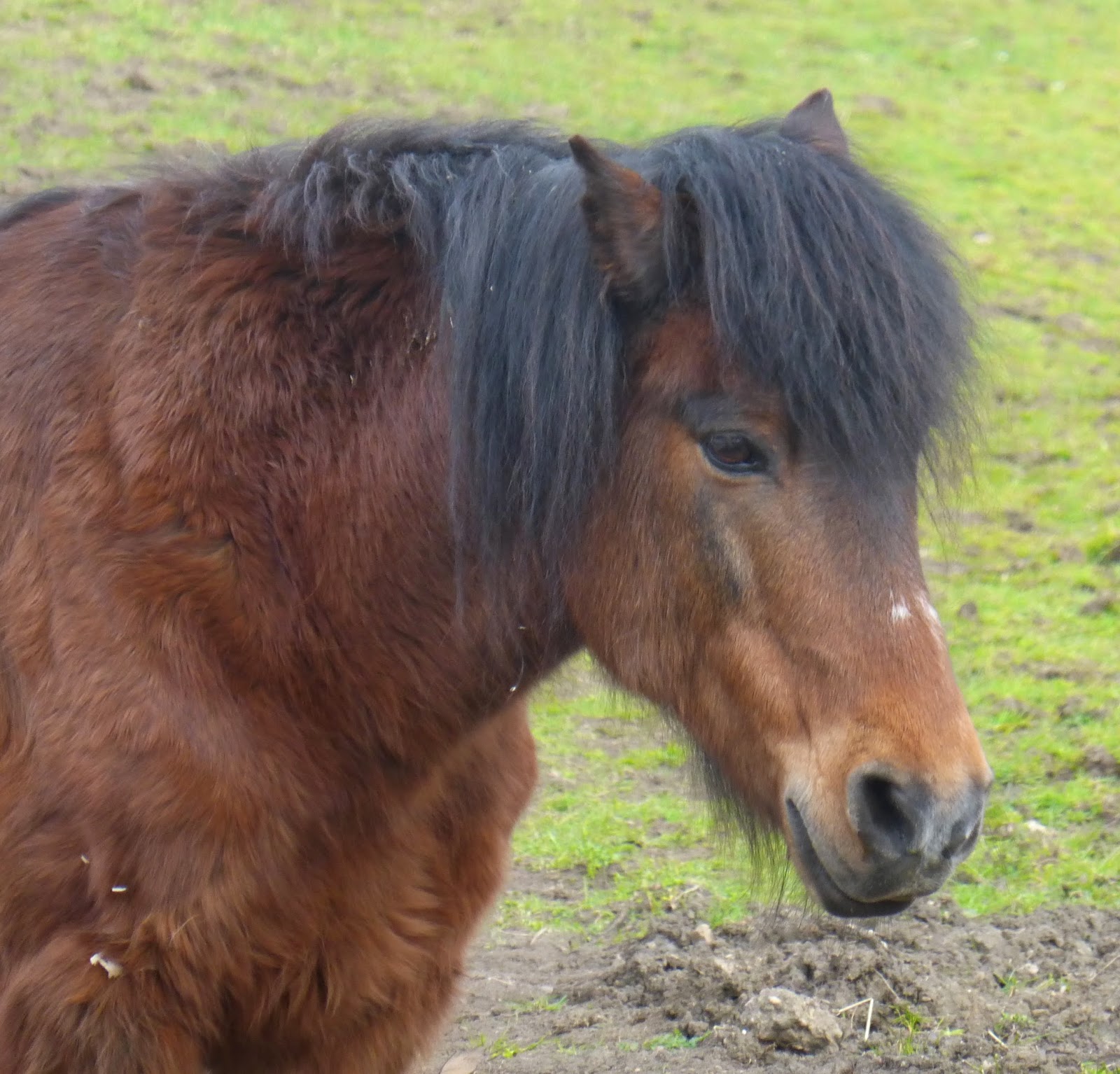

He is a delight to look after, despite his health problems and his bad start in life.  He is a star!


Did you see yesterday's 'Spring Favourites' video? 
Horse Life and Love.  Please check it out and SUBSCRIBE.

You can also follow me on Facebook and Instagram for updates on Chesney, Basil, Fidget and Daisy.

Until next time!
Jo


Tuesday, 24 March 2015

Is your trailer safe?


Last Friday I posted a blog about dressing your horse for travel.  Many of us have a trailer which we use to take our horses and ponies out and about.  Although these may have less potential problems than a horse box it is still important to keep them in tip top condition to ensure the safety of the passengers!


With this in mind there are some important checks you can carry out in addition to regular checks from a professional.  

Floors

  • You should remove the rubber mats and disinfect underneath.  While the mats are out and the floor is drying, check the condition of the floor.  Do this from above and  below even with metal floors!  Prod any 'suspect' areas with a screwdriver.  If the floor is not secure the horse could put a foot through whilst in transit! 
  • Check any surrounding metal work too. 


Doors and Ramps

  • Check the ramps are sound, replace any worn matting that might trip a horse or human. 
  • Check them for rot too in the same way as the floor. 
  • Make sure hinges and catches are secure and lubricated.  You don't want your groom's door swinging open whilst you are going along. 
  • On your ramp grease the point where the spring attaches to the ramp.

Lights

  • Trailers must have 2 white lights to the front and an illuminated number plate at the rear.  Ensure the lights are in working order and clean. You can remove the 'lenses' to clean inside. 
  • Check the indicator lights work individually as they often work on a separate circuit to the hazards! 
  • Clean the plug and car socket (where the electrics attach to the car) with a specialist product available from caravan delers.

Nuts and Bolts

  • Check all nuts and bolts and check that they are tight.  Especially those holding the hitch, wheels and axles on.  Don't force them though as this can cause damage.

Hitches and Towballs

  • Grease inside the hitch cup should be cleaned out occasionally with white spirit because it collects road dirt.  Use a paintbrush to get the white spirit inside.  Once it has dried smear the cup with new grease and then oil the moving parts. 
  • The housing behind the hitch (where the draw tube that works the brakes is) has one or two grease nipples.  Use a grease gun to put grease into these which will lubricate the sliding action.  Some have a grease nipple underneath too. 
  •  Check your towball for wear, many of them have an indicator as the hitch can wear them oval which can be dangerous as the trailer may break free!

Tyres

  • Check the treads on your tyres as you would those on a car. 
  • Check for any cuts or wear too. 
  • Remember to check the tyre pressure on your trailer often.  These will affect the handling and stability of the trailer. 
  • Move the trailer at least once a month to avoid the tyres getting 'flat patches'.
  

Brakes, Wheel Bearings and Electrics

  • Unless you are knowledgeable get these checked by a professional. 
  • If the trailer is not being moved often then leave the brake off and put bricks or blocks of wood behind each tyre to avoid it rolling.  The brakes can get 'locked' on.

Keeping your trailer in tip top condition is essential.  If it is NOT used often then it is just as (if not more so) important to check it before you use it.  If you are not confident with any of the above checks then there are places that will do most of them for you.  Check with the manufacturer!


Top Tips

Every use:

  • Check tyre pressure and condition 
  • Check lights and indicators work 
  • Check for any loose fittings

Every 3 months:

  • Clean and re-grease the hitch cup 
  • Check the ramp condition 
  • Check the condition of wooden floors

Every 6 months:

  • Clean lights and contacts 
  • Check the condition of metal floors

Every 2500 - 3000 miles:

  •  Check brakes and brake shoe wear 
  • Grease drawbar nipples

Every 2 years:
  • Grease wheel bearings

Have you seen my You Tube channel? Horse Lifeand Love
Please check it out and SUBSCRIBE.

You can also follow me on Facebook and Instagram for updates on Chesney, Basil, Fidget and Daisy.

Until next time!
Jo

Monday, 23 March 2015

Is your horse happy?


 I often wonder if my horses are happy, I expect most horse owners do.  I like to think that they are, but what are the positive signs that I am looking for?  Horses don't communicate with tail wagging or purring and certainly don't talk as we humans do.  They have subtle ways of communicating their feelings to each other which we can learn to understand.


The Ears.
We all know (those of us involved in horses) that if a horse has his ears flat back to his head he is not happy.  It can mean a number of things eg: aggression or pain.  If a horse's ears are pricked forward this still does not mean they are happy because they are usually looking at something specific and may be curious or nervous.  If the ears are relaxed and maybe falling out sideways the horse is relaxed and may be snoozing!  When schooling we want a horse whose ears are half turned back towards us as riders which means they are listening to us.  So which of these mean the horse is happy.  I always think a happy horse will be a relaxed horse, one that does not have his ears tightly held in any direction!


The Tail.
How your horse is holding his tail can tell you how they feel too.  If a horse is 'clamping' his tail tightly down then he may be feeling fearful or disgust.  Basil clamps his tail down when I try to wash it, but Chesney loves having his tail washed and holds it out slightly!  If a horse swishes his tail it can indicate annoyance and is often to do with flies.  Some horses hold their tails slightly 'up' when being ridden perhaps this is a sign of enjoyment?  Others will just hold their tails relaxed - perhaps they are the happiest.


The Mouth
If a horse is holding his lips tight it is probably feeling tense, soft floppy lips surely mean a relaxed horse.  A horse foaming slightly in the mouth when ridden is supposedly relaxed and happy in his mouth - his jaw is relaxed and he is chewing with a supple neck and poll.

The Coat
A horse with a bright, shiny, smooth coat is a healthy, happy horse.  Obviously this can be affected by feed but I still feel it is a good indication.  


However, it is important to remember that all horses are individuals and they will all behave in slightly different ways.  Getting to know your horse will help you identify changes to their behaviour which may indicate something is not right.

Building a relationship with them by spending time grooming, riding and working from the ground will help too. When you have a strong relationship your horse is likely to be happiest.   Allowing them time to be themselves too, in their natural environment, with other horses and able to play, graze and snooze.

Top Tips

  • Notice your horse's posture, is he resting a hind leg in a relaxed way, or does he look ready to run? 
  • How does he behave when you arrive, does he look away, does he nicker? 
  • Is his coat shiny, are his eyes bright? 
  • How do you pick up on your horse's mood, does he do something different if he is feeling a bit grumpy?  Some days Basil can be difficult to lead in from the field to ride, other days he looks up expectantly when I arrive. 
  • How does your horse smell?  Most horses smell slightly different. 
  • How does he react to you in different situations?

Try to build up a picture in your mind of your horse and how he is when he is relaxed and how he is if he is 'not quite right'.  You will be able to adjust your behaviour to give him support and extra care if he is having a bad day!


Have you seen last weeks vlog 'One Day'  and look out for my 'Spring Favourites' video this Wednesday.
Horse Life and Love.  Please check it out and SUBSCRIBE.

You can also follow me on Facebook and Instagram for updates on Chesney, Basil, Fidget and Daisy.

Until next time!
Jo